 Aeronautics
Zephir Project
Biomimicry and Innovation for Sustainable, High-Performance Gliding
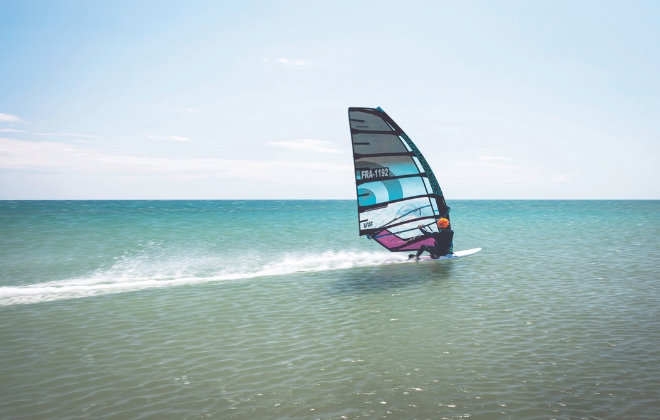
The Zephir Project brings together experts, champions, and industry leaders with a shared goal: to decode the secrets of “absolute gliding” by drawing inspiration from natural mechanisms. By combining biomimicry, cutting-edge technology, and human expertise, the team aims to push the limits of speed while paving the way for the future of eco-mobility.
A Collaboration Between Champions and Engineers
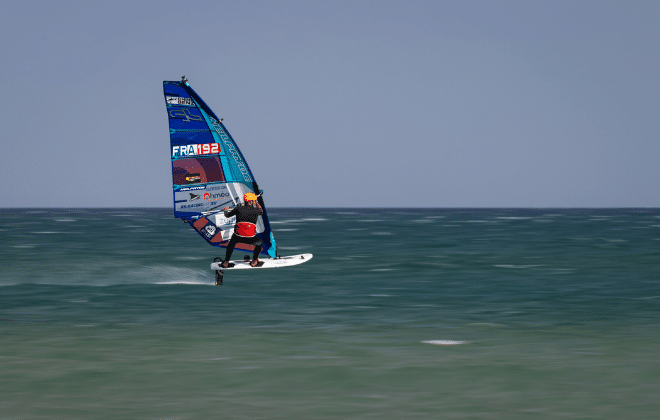
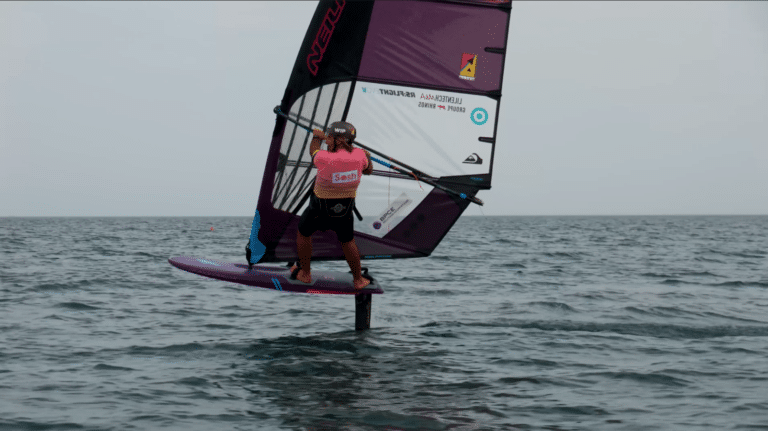
Led by Marc Amerigo, the project unites complementary talents. Antoine Albeau, a 27-time windsurfing world champion and holder of the sailing speed record (53.49 knots, or 99.06 km/h), brings his on-water expertise. He is joined by renowned designers such as Martin Fisher (America’s Cup winner) and Robert Stroj (NeilPryde), along with engineers specialising in fluid dynamics and data science. Emerging talents, like French prospect Pierre Schmitz, complete the team, ensuring a blend of experience and innovation.
The objective is clear: to develop transferable solutions for all gliding disciplines on water and in the air and beyond, towards applications in wind and marine energy. “Our work opens up concrete possibilities for more environmentally friendly mobility,” emphasises Marc Amerigo.
ALTEN: A Key Player in Analysis and Innovation
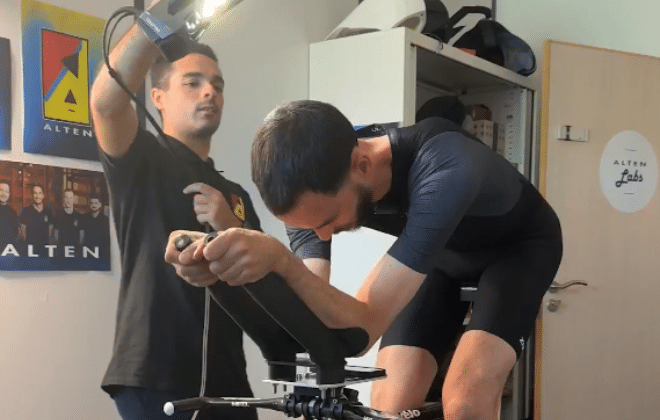
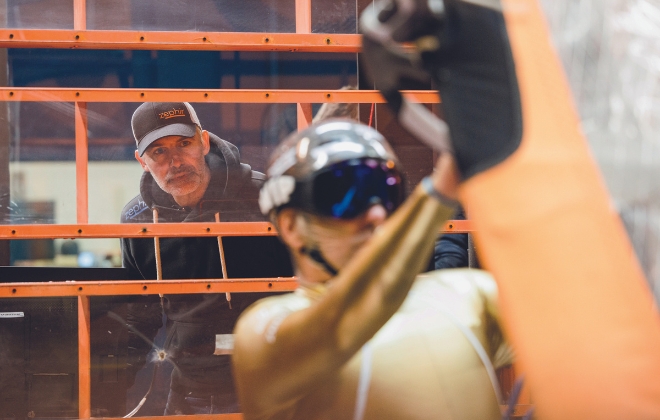
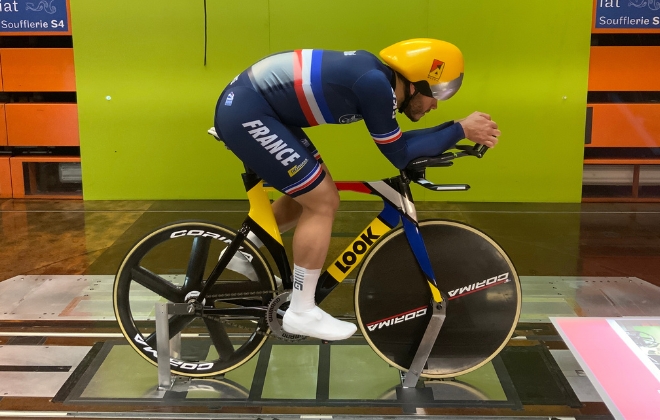
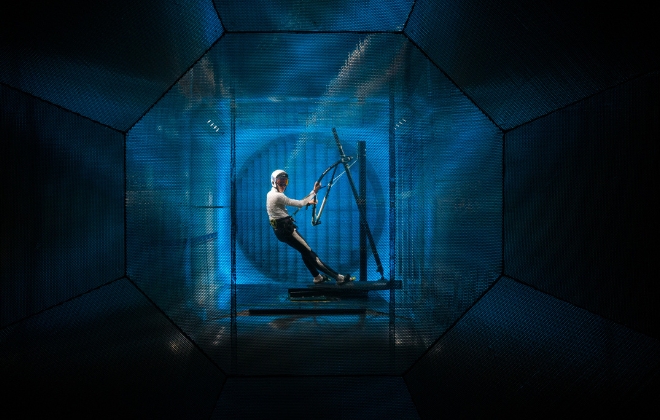
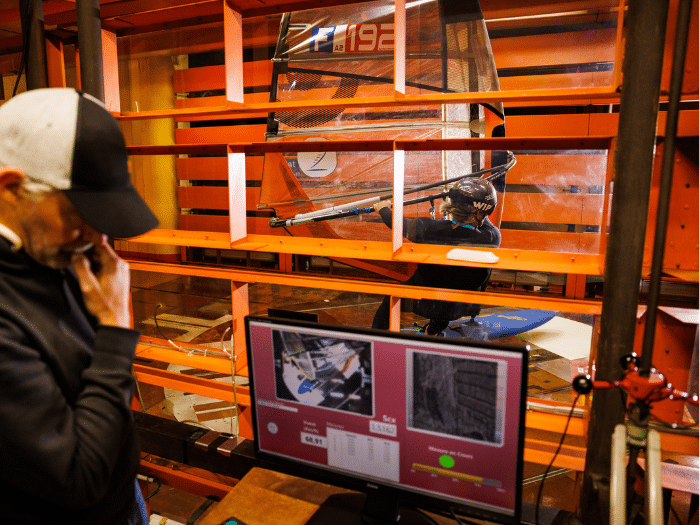
ALTEN plays a central role in the project, contributing its expertise in advanced simulation and prototyping. The teams conduct detailed analyses of aero- and hydrodynamic structures using tools such as 3D modelling and wind tunnel testing at the Aerotechnical Institute (IAT). These tests optimise the stability and performance of equipment, as Antoine Albeau attests: “The wind tunnel results have completely changed my perception of sailing. Reducing turbulence provides an unprecedented gliding sensation.”
Additionally, ALTEN helps structure the project’s ecosystem by facilitating the integration of industrial and scientific partners. The dual challenge is to validate immediate innovations, such as biomimetic hydrofoils or sails, while preparing for future eco-mobility applications.
A Commitment to Sustainable Materials
Beyond performance, the Zephir Project places sustainability at the heart of its priorities. The materials used are designed to be recyclable and reusable, addressing a major challenge: “In a context of rapid technical obsolescence, we must give resources a second life,” explains Marc Amerigo. This approach aligns with a circular economy, where every innovation is designed to minimise its environmental impact.
Towards Practical Applications
The advancements of the Zephir Project extend beyond windsurfing. They foreshadow solutions for future transport, whether for boats, drones, or renewable energy production systems. By combining collective intelligence and high technology, the team proves that it is possible to reconcile sporting excellence, industrial innovation, and planetary respect.