 Aeronautics
AI and intellectual services: value shifts, humans remain central
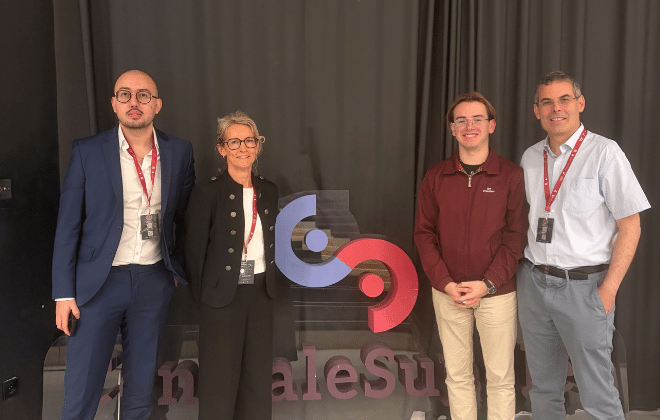
AI is shifting the value of intellectual work toward expertise, judgment, and decision-making. Pascal Agin, Executive Director at ALTEN in charge of Project Delivery & Performance, explains what this means for consulting, engineering, the reliability of deliverables, and young graduates.
These reflections extend the roundtable discussion “The Impact of AI on Intellectual Services”, held on October 10 during the Île-de-France Autumn Regional Congress of Junior-Entreprises at CentraleSupélec.
What do we mean by “intellectual services” in the AI era?
Intellectual services refer to expertise- and knowledge-based offerings rather than physical products: consulting, engineering, software development, system integration, and technical documentation. With generative AI, these professions are particularly exposed—since their raw material is information—but they are also among the best positioned to leverage its potential.
How is AI changing engineering professions?
AI is shifting the value of intellectual work from execution to expertise, arbitration, and decision-making.
- Tasks such as research, synthesis, reporting, and initial analysis are largely automatable.
- Expertise, validation, and judgment are gaining importance.
Some activities, like technical documentation or logistics, are heavily impacted because they lend themselves to automation. However, new fields are emerging in parallel: robotics, cybersecurity, energy, defense, and supporting clients in deploying AI for their projects.
From a means-based logic to an impact-based logic
Clients are no longer just looking for execution capacity. They seek partners capable of transforming technology into tangible results, with higher demands for quality, governance, and data sovereignty. This shift predates AI, which is simply accelerating it.
At ALTEN in 2026:
- 75% of activity in France is based on projects with result-based commitments.
- 80% of offers include an AI component.
Productivity gains do not always translate into budget cuts: many ALTEN clients choose to reinvest them in reducing technical debt or launching new projects rather than reducing their spending.
How can we ensure the reliability of AI-assisted deliverables?
A deliverable produced with AI assistance must meet the same quality standards as a traditional one, with human oversight at every step. This is critical for high-stakes systems, such as embedded software used in aeronautics. AI can make mistakes—the responsibility for verification remains human.
Three governance principles for AI-augmented services:
- Humans retain final responsibility for important decisions.
- Transparency is mandatory: validated tools, prior client approval, and no client data processed on unsecured AI clouds.
- Time saved is reinvested in client relationships, mentoring, knowledge sharing, and innovation.
Two frameworks structure this governance:
- The AI Act, the first European regulation adapting obligations based on the risk level of AI systems.
- ISO/IEC 42001:2023, the first international standard for AI management systems.
ALTEN draws inspiration from these for its internal AI charter, supplemented by regular audits.
What role for young graduates in the AI era?
Young graduates remain essential, but their learning process is evolving:
- Fewer repetitive tasks, more analysis, critical thinking, and business understanding.
- AI is taking over some of the tasks that traditionally served as learning grounds.
A company that stops training its young talent jeopardizes its future. Tomorrow, an engineer’s value will come less from their ability to produce a document and more from their ability to challenge, interpret, and decide. Critical thinking is becoming as important as technical expertise.
What AI doesn’t see
AI does not perceive a client’s unspoken concerns, a team’s loss of buy-in, or an unexpressed worry in a meeting. It analyzes data, generates recommendations, and accelerates deliverable production. But in service-based professions, technology is rarely the primary reason for a project’s success or failure. What makes the difference is trust, a deep understanding of client needs, and the ability to propose an offer that meets them.
This human dimension is not a leftover that AI will eventually absorb—it is the core value of intellectual services.
Toward 2030: partners orchestrating human expertise and AI
By 2030, clients will expect less from resource providers and more from partners capable of orchestrating human expertise, AI, data, and automation, with more integrated and measurable services. ALTEN is investing in skills, centers of excellence (Morocco, India), accelerators, and governance. Since clients remain free to choose their AI tools, the Group has formed partnerships with the sector’s leading players.
“The future belongs neither to humans alone nor to AI alone, but to those who can intelligently combine the two.” — Pascal Agin, Executive Director – ALTEN